
RRSP and RESP REIT Investing in Canada: How Registered Accounts Can Hold Real Estate Investments
Published November 24, 2026
Can you invest in a REIT through an RRSP or RESP in Canada? Yes. Certain real estate investment trusts (REITs) qualify for registered accounts, allowing Canadians to gain exposure to income-producing real estate while using the tax benefits available through their retirement or education savings plans. For many investors, an RRSP or RESP represents years of contributions and financial planning. Understanding the investments these accounts can hold is an important part of deciding how that money should be managed.
REITs offer one way to participate in commercial real estate without purchasing, financing or managing an entire property yourself. Industrial REITs, in particular, focus on properties such as warehouses, distribution facilities, light-industrial buildings and commercial spaces used by operating businesses. But there are important differences between owning a REIT through an RRSP and holding one through an RESP. The two accounts have different purposes, contribution rules, tax treatment and withdrawal requirements.
This guide explains:
- How RRSPs and RESPs work in Canada
- How REITs may qualify as investments in registered accounts
- The tax treatment of REIT distributions inside each account
- Why private REITs require additional consideration
- How industrial real estate can contribute to a diversified investment portfolio
- What investors should review before using registered savings to invest in a REIT
We will also explain how InvestPlus Industrial REIT provides access to professionally managed industrial real estate across Western Canada.
Understanding RRSPs and RESPs: What Is the Difference?
Before exploring REIT investing, it helps to understand what registered investment accounts actually do. An RRSP and an RESP are not investments themselves. They are government-registered savings arrangements that can hold permitted investments. Those investments can include GICs, stocks, bonds, mutual funds, exchange-traded funds and qualifying REIT units.
The account establishes the tax treatment and withdrawal rules. The investments inside the account determine the exposure to financial markets, real estate and other assets.
What is an RRSP?
An RRSP (Registered Retirement Savings Plan) is a Canadian registered account designed to help individuals save for retirement. One of its main benefits is the ability to deduct eligible contributions from taxable income, up to the individual's available deduction limit. Income and investment gains generally accumulate without current personal income tax while they remain inside the RRSP.
When money is withdrawn, it is generally included in the account holder's taxable income. For example, an investor might hold a combination of stocks, bonds and REIT units in an RRSP. If a REIT makes a distribution, that payment can remain inside the RRSP and potentially be reinvested, subject to the investment and account's terms. The investor generally does not pay personal income tax on that distribution simply because the RRSP received it. Tax normally applies when funds are withdrawn from the RRSP.
This is known as tax-deferred investing.
What is an RESP?
An RESP (Registered Education Savings Plan) is a registered account designed to help families save for a beneficiary's post-secondary education. Parents, grandparents and other eligible subscribers can contribute to an RESP. Unlike an RRSP, RESP contributions are not deductible from the contributor's taxable income. However, eligible RESPs offer other benefits:
Investment earnings generally accumulate without current tax while they remain in the plan. Eligible contributions can attract government education savings grants. Beneficiaries may receive additional government assistance based on eligibility. Educational assistance payments are generally taxed in the student's hands, rather than the contributor's.
When a beneficiary attends qualifying post-secondary education, payments can help cover tuition and other eligible educational expenses. An RESP can hold qualifying investments, potentially including REIT units, but investment selection must account for when education funds will be needed.
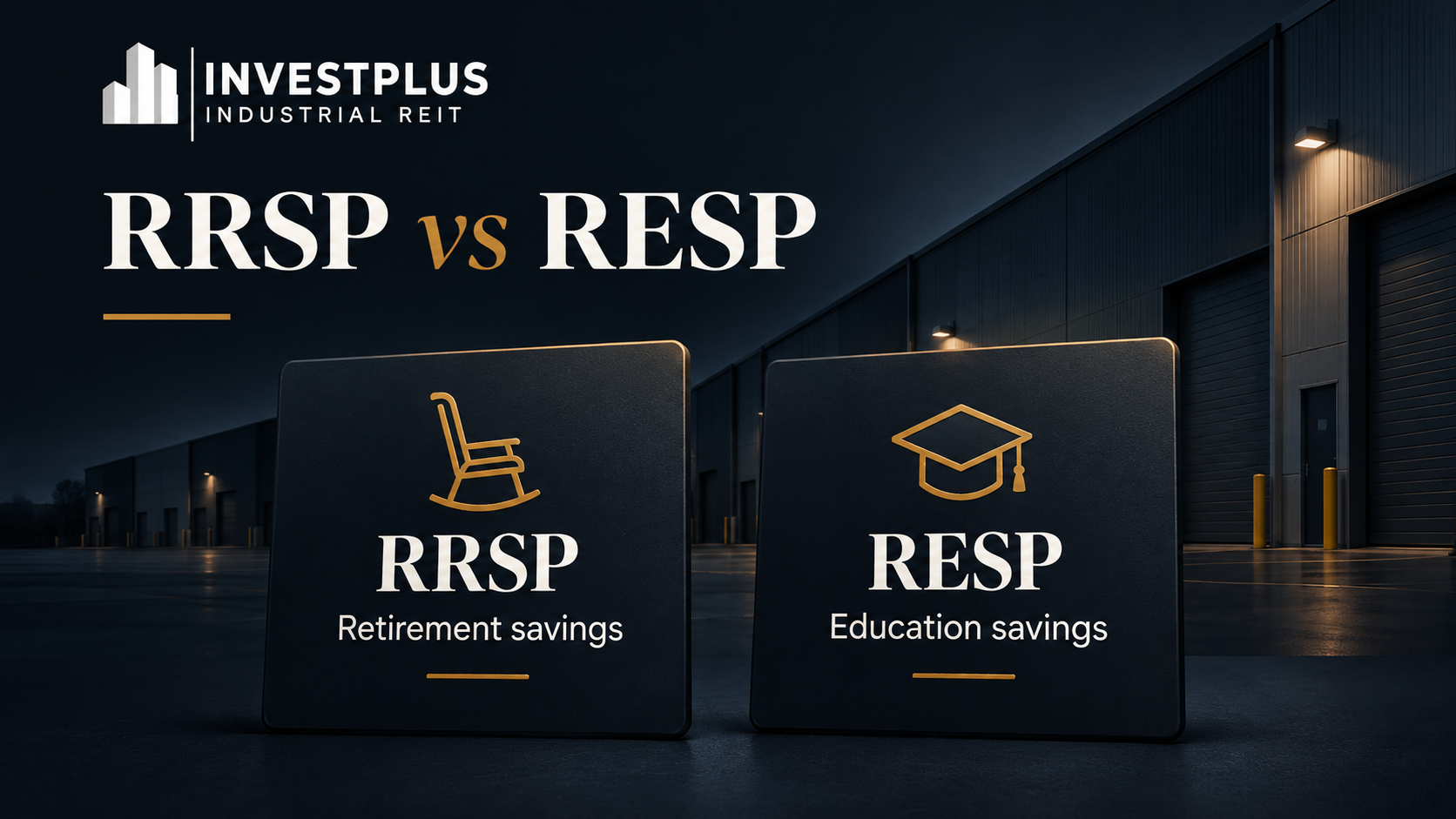
RRSP vs. RESP: Side-by-side comparison
| Feature | RRSP | RESP |
|---|---|---|
| Primary purpose | Retirement savings | Post-secondary education savings |
| Who benefits? | Account holder, subject to plan rules | Named beneficiary |
| Contributions tax-deductible? | Generally yes, within available deduction room | No |
| Investment growth | Generally tax-deferred | Generally tax-deferred |
| Government grants | No regular contribution-matching education grant | CESG and potentially other benefits |
| Contribution limits | Based on individual deduction room | $50,000 lifetime per beneficiary |
| Withdrawals | Generally taxable to the account holder | Contributions generally tax-free; educational assistance payments generally taxable to the student |
| REIT eligibility | Qualifying REIT investments may be held | Qualifying REIT investments may be held |
| Main planning concern | Retirement timing and future withdrawals | Education costs and access to funds when needed |
Both accounts can support long-term investment planning. The more relevant question is which investments fit the purpose and timeline of each account.

Can You Invest in REITs Through an RRSP or RESP in Canada?
Yes. Canadian registered accounts can hold REIT investments that meet the Canada Revenue Agency's qualified investment rules. However, not every REIT automatically qualifies, and not every financial institution permits every qualifying investment. Three separate requirements matter.
1. The REIT investment must qualify under Canadian tax rules
The Canada Revenue Agency establishes which types of investments are permitted inside registered accounts. Units of REITs listed on a designated stock exchange are generally qualified investments. Certain private trusts may also qualify under specific provisions of Canadian tax law, including rules relating to mutual fund trusts and registered investments.
Importantly, a REIT does not have to trade on a public stock exchange in every case to be eligible for a registered account. However, the fact that a company describes itself as a private REIT is not, by itself, proof that its units qualify. Investors should confirm the precise legal status of the units being purchased. The CRA explains these requirements in its Qualified Investments guidance for registered plans.
2. Your account administrator must accept the investment
Many Canadians hold RRSPs or RESPs through banks, brokerage firms or investment providers. These institutions do not all offer the same investment choices. A standard registered account may support publicly traded REITs but not private securities. Other institutions offer self-directed registered accounts that can accommodate a wider range of investments.
Even where an investment meets CRA requirements, the account administrator may decline to hold it under its own policies. Investors need to establish that their account provider can accept, hold, value and administer the specific investment.
3. You must meet the investment's purchasing requirements
Private REIT investments may be offered under securities-law exemptions that limit who can participate. Depending on the offering and the investor's circumstances, eligibility may depend on accredited investor status, other applicable exemptions and suitability requirements. Being able to hold an investment in an RRSP or RESP does not automatically mean that every person with one of those accounts can purchase it.
The distinction is simple: registered-account eligibility, custodian acceptance and investor eligibility are separate questions. All three should be addressed before funds are committed.
How REIT Investing Works Inside an RRSP
An RRSP can hold a portfolio of investments selected to support retirement planning. For an investor looking at real estate exposure, a qualifying REIT may provide an alternative to purchasing and managing physical property. Rather than buying a warehouse directly, an investor can acquire units in a REIT that owns or invests in income-producing properties.
The REIT's management team oversees the real estate portfolio, including acquisitions, leasing, financing and property operations. Investors participate economically through their units, subject to the REIT's structure and offering terms.
The potential tax benefit of holding REITs in an RRSP
REIT distributions may have different tax characteristics when held in a non-registered account. Depending on their composition, distributions can include income, capital gains or return of capital. Inside an RRSP, these components generally do not create the same immediate personal income tax reporting obligations that would arise in a non-registered account.
Instead, the RRSP's usual tax treatment generally applies. Investment earnings may accumulate without current personal income tax, and withdrawals are generally taxable. This can simplify the way an investor holds a REIT as part of retirement savings. It does not eliminate investment risk or make withdrawals permanently tax-free.
A practical RRSP example
Consider an investor who has $50,000 in an existing RRSP. The investor decides to review different investments that could provide exposure to real estate. They may examine:
- Publicly traded Canadian REITs
- REIT exchange-traded funds
- Qualifying private REITs
- Other permitted investments
Suppose the investor allocates $10,000 of existing RRSP assets to a qualifying REIT. If that REIT pays a $100 cash distribution into the RRSP, the money generally remains within the registered plan. The account holder can then review the options permitted by the trustee and the REIT, such as retaining the cash or reinvesting it. The $100 distribution is not a new personal RRSP contribution. It is investment income received within the account.
No additional RRSP contribution room is required simply because the REIT made that distribution. If the investor later withdraws money from the RRSP, ordinary RRSP withdrawal tax rules generally apply. This example illustrates account mechanics only. The amount and timing of distributions are hypothetical and do not represent an expected REIT return. Distributions may be reduced or suspended, and investment values can decline.
Can an existing RRSP be used to purchase REIT units?
Potentially, yes. An investor may already have retirement savings in an RRSP and want to allocate part of that account to qualifying real estate investments. In some cases, eligible funds can be transferred directly between RRSP administrators. A properly completed direct RRSP-to-RRSP transfer generally does not count as a taxable withdrawal or use new RRSP contribution room.
This differs from withdrawing cash personally and then contributing it to another RRSP. A personal withdrawal generally creates taxable income, while a later contribution is subject to the account holder's contribution rules. The process may also involve trustee fees, account setup requirements or restrictions on transferring existing assets.
Anyone considering this approach should confirm the required procedures with the sending and receiving institutions before requesting a transfer. Learn more about self-directed RRSPs from the CRA.
RRSP Contribution Limits: What Canadian Investors Should Know
An RRSP offers tax advantages, but contributions are subject to limits. For 2026, the federal RRSP annual dollar limit is $33,810. That figure is a statutory ceiling used in calculating new deduction room. It is not the amount every Canadian can automatically contribute. An individual's actual RRSP deduction limit generally depends on:
- Unused deduction room from previous years
- Earned income from the previous year
- The annual RRSP dollar limit
- Applicable pension adjustments
- Other adjustments under the tax rules
Generally, new RRSP room is based on 18% of the previous year's earned income, subject to the annual cap and relevant adjustments. You can review your personal RRSP deduction limit through your CRA My Account or your latest notice of assessment.
Does buying a REIT affect RRSP contribution room?
The purchase itself does not necessarily create a new contribution. If you buy qualifying REIT units using cash already held inside your RRSP, you are changing the investments within the account. You are not making a fresh personal contribution. A new deposit of outside funds into the RRSP, on the other hand, may use available contribution room.
This distinction matters for investors considering transferring some existing retirement savings into a registered account that supports private investments.
What happens when you retire?
Under the RRSP rules in effect in November 2026, an RRSP must mature by the end of the calendar year in which the account holder turns 71. Common options include transferring eligible assets into a Registered Retirement Income Fund (RRIF), purchasing an eligible annuity or withdrawing the funds. A RRIF is subject to annual minimum withdrawal requirements beginning the year after it is established.
This creates an important consideration for investors holding private REIT units. If an investment cannot be readily redeemed or sold, meeting future cash withdrawal requirements may require planning. An investor approaching retirement should confirm that the receiving RRIF can hold the investment and that sufficient liquidity will be available for required withdrawals.
Regulatory update: Canada's 2026 federal budget proposed an "RRSP for life" framework that could change the required RRSP-to-RRIF transition. That proposal remains subject to the legislative process and should not be treated as a current rule.
Can You Invest in REITs Through an RESP?
A qualifying REIT can potentially be held within an RESP, provided the RESP promoter accepts the investment and the applicable tax and plan requirements are met. For parents or grandparents evaluating an RESP, real estate exposure may be one of several investment choices available. However, RESP investment decisions require a different approach from retirement investing.
An RESP exists to support future education expenses, which often have a more defined starting date. A family might have 15 years before a child begins post-secondary education, or only two years. That timing can significantly affect the suitability of investments that cannot be sold quickly.
How an RESP grows
An RESP generally contains three categories of money:
Personal contributions: Money contributed by the subscriber. Government benefits: Eligible grants or bonds deposited into the account. Investment earnings: Income and gains generated by investments held inside the RESP. Qualifying REIT distributions received within the RESP generally remain in the plan without current personal income tax, subject to the registered-plan rules.
However, the money must remain available under the plan's terms so it can eventually support the beneficiary's education. A REIT distribution held within the RESP is not automatically an educational assistance payment. The RESP promoter administers withdrawals and determines payments under the applicable rules.
RESP Contribution Limits and Government Grants in Canada
One of the main reasons families use RESPs is access to government education savings incentives.
RESP lifetime contribution limit
The lifetime contribution limit is $50,000 per beneficiary. There is no annual RESP contribution limit under the current rules. The lifetime limit applies across all RESPs established for the same beneficiary, not separately to each account. For example, if two grandparents and a parent each contribute to different RESPs for the same child, those contributions count toward the combined $50,000 lifetime limit.
Government education savings grants and designated provincial program payments do not count toward that personal contribution limit. Excess personal contributions can trigger a tax of 1% per month on the excess amount, allocated under CRA rules.
Canada Education Savings Grant (CESG)
The Canada Education Savings Grant is a federal incentive designed to encourage education savings. Under the basic CESG:
The government generally contributes 20% of eligible personal RESP contributions. The usual annual basic grant maximum is $500 per beneficiary. A $2,500 eligible annual contribution generally attracts $500 in basic CESG. Unused grant entitlement may permit up to $1,000 in basic CESG in a later year. The lifetime CESG maximum is $7,200 per beneficiary.
Additional CESG amounts may be available to qualifying families based on adjusted family income. Eligibility requirements and age-related contribution rules apply.
Example: Contributing $2,500 to an RESP
Suppose a family contributes $2,500 to an eligible RESP for a child.
| Component | Amount |
|---|---|
| Family contribution | $2,500 |
| Basic CESG at 20% | $500 |
| Total deposited | $3,000 |
The account would then have $3,000 available to invest, before any fees or investment changes. This example assumes the beneficiary and contribution qualify for the full basic grant. The government grant is tied to RESP eligibility and contributions, not to the choice of a REIT. Investing in a REIT does not provide an additional government grant beyond the incentives that the beneficiary otherwise qualifies to receive.
Canada Learning Bond (CLB)
Some families may also qualify for the Canada Learning Bond. The CLB provides up to $2,000 in federal education savings assistance for eligible children from low-income families. Unlike the CESG, personal contributions are not required to receive the CLB. This distinction matters for families beginning an education savings plan. Government assistance should be considered separately from the expected performance of any investment held inside the RESP.
For detailed information, see the Government of Canada's education savings programs.
How Are REIT Distributions Taxed Inside an RESP?
The tax treatment of REIT distributions inside an RESP differs from holding the same investment in a personal, non-registered account. Generally, investment earnings accumulate without current tax while they remain inside the RESP. When funds are paid to an eligible beneficiary for post-secondary education, the withdrawal can include different components.
Return of contributions
Personal contributions can generally be returned from an RESP without being included in the recipient's taxable income. Those contributions were made using after-tax funds.
Educational assistance payments (EAPs)
Educational assistance payments generally include:
- Investment earnings accumulated within the RESP
- Canada Education Savings Grants
- Canada Learning Bonds
- Applicable provincial education savings benefits
EAPs are taxable to the beneficiary in the year received. Because students may have relatively low taxable income and access to relevant tax credits, the actual tax payable may be lower than it would be if the same income were earned by a higher-income parent. The outcome depends on the student's complete tax situation.
Example of RESP earnings
Imagine an RESP holding several permitted investments, one of which is a qualifying REIT. Over time, those investments produce earnings that remain in the account. When the beneficiary attends an eligible post-secondary program, the promoter may make educational assistance payments that include the investment earnings. Those payments generally become taxable income for the student.
The account's tax benefits come from the RESP rules. They do not mean that REIT earnings can be withdrawn for any purpose without tax consequences.
Why Liquidity Matters More When Investing Through an RESP
One of the most important factors in RESP investment planning is access to funds. Education expenses tend to arrive at specific times. Tuition may be due at the beginning of a semester. Housing payments, books, transportation and other eligible costs can also require cash at predictable intervals. This makes liquidity particularly important.
Public REITs vs. private REITs
A publicly traded REIT generally allows investors to sell units on a stock exchange during market hours, subject to trading conditions. The sale price can rise or fall based on market conditions. A private REIT does not necessarily provide the same ability to sell. Private REIT units may be subject to restrictions, limited redemption opportunities or other conditions that make them difficult to convert into cash.
For an RESP, this difference can affect how easily funds can be accessed when educational expenses arise.
Example: An RESP with a shorter investment timeline
Consider a family saving for a child who is 16 years old. The child expects to begin post-secondary education in approximately two years. The family is reviewing investment options inside the RESP. A private investment with limited redemption options may present a problem if the family needs to access the funds before the investment can be sold or redeemed.
Even if the investment generates distributions, those payments may not provide enough cash to cover upcoming expenses. The family should consider the timing and amount of anticipated education costs before making that allocation.
The practical lesson
A long-term investment may be better suited to an investor with a longer time horizon and sufficient cash or other liquid assets elsewhere in the portfolio. An investor with near-term education expenses may need greater flexibility. This is one reason an RESP investment decision should consider the beneficiary's age, expected education costs and the availability of other funds.
Private REIT units may have limited liquidity. Their inclusion in a registered account does not remove redemption restrictions or create a public market for the units.
What Happens When a Student Starts Using Their RESP?
An RESP can help pay eligible post-secondary education costs when the beneficiary meets the program's requirements. The RESP promoter will generally require proof of enrolment before making educational assistance payments. Under current federal rules:
Students enrolled in qualifying full-time programs generally have an initial EAP limit of $8,000 during the first 13 consecutive weeks. Students in qualifying part-time programs generally have an EAP limit of $4,000 over the applicable 13-week period. Different rules can apply after the initial period and in certain circumstances. Contributions may generally be withdrawn separately from EAPs, subject to the plan's terms and grant repayment rules.
The promoter is responsible for administering the RESP according to the law and the specific plan contract. If the account holds assets that cannot readily be sold, a family may face challenges producing the cash required for an educational payment. This is another reason to review private REIT redemption conditions before holding units in an RESP.
What if the child does not attend post-secondary education?
An RESP does not necessarily have to be closed immediately if a beneficiary postpones education. Depending on the plan and circumstances, families may have options involving another eligible beneficiary, continued savings or the eventual closure of the plan. Personal contributions can generally be returned without tax. Unused government benefits may need to be repaid to the government.
Accumulated investment earnings that are paid to the subscriber outside the normal educational payment process may be subject to income tax and an additional 20% tax, subject to applicable rules and exceptions. In certain circumstances, an eligible accumulated income payment may be transferred to an RRSP, subject to the relevant conditions and available room.
Families should ask their RESP promoter and tax advisor about the consequences before closing a plan or changing beneficiaries.
Why Consider Industrial Real Estate Within a Registered Investment Portfolio?
For investors interested in the real estate sector, industrial properties represent a particular segment of the commercial market. Industrial real estate includes buildings used for storage, manufacturing, distribution, logistics and business services. These properties play a role in supporting the movement of products and the operations of businesses.
Through an industrial REIT, investors can potentially gain exposure to multiple properties without directly managing tenants, maintenance or leasing.
1. Exposure to physical real estate assets
An industrial REIT can provide economic exposure to property-backed investments. The underlying buildings may generate rental revenue from commercial tenants. Property performance depends on factors including tenant occupancy, rental rates, lease terms, operating costs, financing and local market conditions. This differs from directly purchasing shares in an operating company whose revenue comes primarily from selling products or services.
However, real estate investments remain exposed to economic changes, financing conditions and shifts in tenant demand.
2. Industrial tenants may operate under net leases
One characteristic of many industrial property investments is the use of net lease structures. Under a net lease, tenants typically pay some or all specified property-related operating expenses in addition to base rent. Depending on the lease, these expenses can include:
- Property taxes
- Building insurance
- Common-area maintenance
- Certain repairs and operating expenses
- Utilities and other property-related charges
In a typical triple-net lease, the tenant is responsible for property taxes, insurance and maintenance costs covered by the lease. This structure can help the property owner manage operating expense exposure and provide a clearer view of income from base rent. The actual allocation of expenses depends on the lease agreement. Owners may remain responsible for financing, management, major capital work and other obligations.
Net leases do not eliminate risks such as tenant default, vacancy, unexpected repairs or refinancing costs.
3. Access to a managed property portfolio
Direct ownership of industrial real estate generally requires substantial capital and ongoing management. An investor purchasing an industrial building must consider financing, leasing, tenant relationships, property taxes, insurance, repairs and potential vacancies. A REIT structure allows investors to participate through units while professional management oversees the properties.
This can make industrial real estate accessible without the operational responsibilities associated with directly owning a building.
4. Potential portfolio diversification
A diversified investment portfolio may include different asset classes and sources of income. Industrial real estate can provide exposure to commercial property demand and tenant rental payments. Private real estate values may also be assessed differently from publicly traded securities. However, less frequent valuations should not be confused with lower economic risk.
Property values can decline, and private investments may be difficult to sell. A REIT investment should be considered in the context of the investor's complete portfolio, concentration levels, time horizon and ability to absorb losses.
Public REITs vs. Private REITs: What Registered Investors Should Understand
Not all REITs operate in the same way. A publicly traded REIT and a private industrial REIT may own similar types of buildings, but the investment experience can differ substantially.
| Consideration | Public REIT | Private REIT |
|---|---|---|
| Trading | Generally bought and sold on an exchange | Not typically exchange-traded |
| Access to funds | Sale possible during trading hours, subject to market conditions | Redemptions or transfers may be limited or restricted |
| Unit pricing | Market-based trading price | Valuation approach described in offering documents |
| Investment access | Usually available through standard brokerage accounts | May require a specialized account and eligibility review |
| Distributions | Based on trust operations and policies | Based on trust operations and policies |
| Property management | Managed by the REIT | Managed by the REIT |
| Tax treatment in registered accounts | Depends on account and investment eligibility | Depends on account and investment eligibility |
| Investment risks | Market, property, financing and operating risks | Property, financing, operating, valuation and liquidity risks |
Neither structure automatically produces better results. For an RRSP or RESP investor, account compatibility and the ability to access cash may be as important as the underlying real estate strategy. Before choosing a private REIT, investors should review its Offering Memorandum, financial statements, redemption terms, investment strategy and distribution policy.
How InvestPlus Industrial REIT Fits Into the Discussion
InvestPlus Industrial REIT is a Calgary-based private real estate investment trust focused on industrial properties across Western Canada. The REIT provides eligible investors with access to a professionally managed portfolio of income-producing commercial and industrial properties. Its investment approach centres on acquiring, managing and operating real estate that supports businesses through warehousing, logistics, light-industrial operations and other commercial uses.
InvestPlus currently identifies RRSPs, RRIFs, TFSAs and RESPs among the registered account types available for its investment offering. However, investors should confirm that the specific unit class qualifies for their registered account, that the proposed trustee or promoter can hold the units, and that all investor eligibility requirements have been satisfied.
What makes the industrial strategy relevant?
The industrial real estate market is tied to the practical space requirements of operating businesses. Companies need facilities for storing inventory, receiving materials, manufacturing products, servicing customers and distributing goods. InvestPlus focuses on identifying and managing properties in Western Canadian markets where these activities create demand for commercial industrial space.
A defining part of many industrial property leases is that tenants cover specified operating costs alongside their base rent. This structure can support clearer rental income calculations, although the actual responsibilities depend on each lease. The REIT also manages financing, tenant relationships, acquisitions, maintenance responsibilities and portfolio operations.
Investors can learn about the properties and the REIT's investment approach through the InvestPlus commercial portfolio and investor information page.
What about distributions?
InvestPlus Industrial REIT has a history of making quarterly distributions to investors. That history may be relevant when reviewing the fund's operations, but historical payments do not establish what the REIT will distribute in the future. Distributions depend on cash flow, property operations, financing needs and management decisions. They may be reduced or suspended.
For investors using an RRSP or RESP, any cash distributions would generally remain subject to the registered account's administration and withdrawal rules. Investors should also understand that private REIT units may have limited liquidity. InvestPlus states that there is currently no secondary market through which its units may be sold, and there is no assurance one will develop.
These conditions matter for retirement planning and can be especially significant for an RESP with upcoming education expenses.
Want to review the investment structure before speaking with the team?
Download the InvestPlus Industrial REIT Investor Overview Whitepaper to learn about the portfolio, distribution structure, investment considerations and risks.
How to Evaluate a Private REIT for Your RRSP or RESP
Registered account eligibility should be the beginning of the review, rather than the end. Before committing registered savings to a private REIT, investors should consider several questions.
1. Is the specific investment qualified?
Ask how the units meet Canadian registered-plan qualified investment requirements. Confirm that the proposed investment is eligible for the type of account being used.
2. Will the trustee or RESP promoter accept the units?
The administrator must be able to hold the specific investment. Ask about the necessary documents, valuation procedures, transaction fees and ongoing administration requirements.
3. What is the investment's liquidity policy?
Review the redemption provisions carefully. Ask about redemption restrictions, notice requirements, fees, possible suspension of redemptions and circumstances in which an exit may be delayed. Do not assume that an investment can be sold when an RRSP or RESP requires cash.
4. How does the REIT generate revenue?
Understand the buildings, tenants, rental income and lease structures. For industrial properties, ask how property taxes, insurance, maintenance and major capital expenses are allocated.
5. How are distributions funded?
Review the trust's distribution policy and relevant financial statements. Understand how rental revenue, operating expenses, debt obligations and capital needs affect the funds available for distribution.
6. What financing risks exist?
Property loans and refinancing arrangements may affect investment performance. Review leverage, debt maturities, borrowing costs and the REIT's approach to financing.
7. How does this allocation fit your broader portfolio?
A registered account can hold investments with different levels of liquidity, concentration and risk. Consider the role of the REIT alongside your other investments, not in isolation.
8. What is your investment timeline?
An RRSP investor who is decades from retirement may have different needs from someone approaching annual retirement withdrawals. An RESP beneficiary who may begin post-secondary education soon creates another set of timing considerations. Investment terms should be assessed against these needs.
9. Are there administrative or professional fees?
Private investments held through specialized registered account providers may involve setup, custody, transaction or annual administration fees. Review these alongside the REIT's own fees and expenses.
10. Have you reviewed the Offering Memorandum?
The Offering Memorandum contains information about the investment structure, securities, risks, financial statements and subscription requirements. It should be reviewed before an investment decision is made. You can request the current InvestPlus Industrial REIT Offering Memorandum and discuss the details with an appropriately registered dealing representative and qualified financial or tax advisor.
Common Questions About RRSP, RESP and REIT Investing in Canada
Can I hold REITs in my RRSP in Canada?
Yes. Many REIT investments qualify for RRSPs, including most REIT units listed on designated stock exchanges and certain eligible private trust investments. Your RRSP issuer must also permit the investment.
Can I use my RESP to invest in a REIT?
Yes, a qualifying REIT may be permitted in an RESP. The investment must satisfy registered-plan rules, and the RESP promoter must accept it. Liquidity and the beneficiary's education timeline deserve particular attention.
Are private REITs RRSP eligible?
Some private REIT investments qualify for RRSPs under Canadian tax rules. Qualification depends on the specific investment structure. A private REIT is not automatically eligible simply because it owns Canadian real estate.
Are private REITs RESP eligible?
Some may be eligible, subject to the CRA's qualified investment rules and the RESP promoter's investment policies. Investors should verify the specific units and account arrangements before purchasing.
Does an RRSP make REIT distributions tax-free?
Not permanently. Qualifying investment income generally accumulates without current personal income tax while it remains in the RRSP. Amounts withdrawn from the RRSP are generally taxable.
How are REIT distributions taxed inside an RESP?
Qualifying investment earnings generally accumulate without current tax while held inside the RESP. When earnings are paid out as educational assistance payments, they are generally taxable to the beneficiary.
Does investing in a REIT increase RESP government grants?
No. Government education savings grants depend on contribution amounts and the beneficiary's eligibility. A REIT investment does not create additional grant entitlement by itself.
What is the maximum RRSP contribution in 2026?
The 2026 annual RRSP dollar limit is $33,810, but your personal deduction limit may be different. Your contribution and deduction room depends on earned income, unused room and applicable adjustments. Check your CRA records before contributing.
What is the maximum RESP contribution?
The current lifetime personal contribution limit is $50,000 per beneficiary across all RESPs. There is no annual contribution limit. Government grants and designated provincial program payments do not count toward the personal contribution limit.
Can I transfer my existing RRSP to invest in a private REIT?
A direct transfer of eligible RRSP assets to another RRSP issuer may be possible without triggering an ordinary taxable withdrawal. The receiving issuer must accept the investment, and the REIT units must qualify for the account. Confirm the process before transferring funds.
Can I transfer money directly from my RRSP to my RESP?
There is generally no ordinary tax-free direct transfer from an RRSP to an RESP simply because both are registered accounts. Withdrawing from an RRSP to fund an RESP would generally create a taxable RRSP withdrawal. Special rules may apply to particular circumstances, so seek tax advice before arranging transfers.
What is a self-directed RRSP?
A self-directed RRSP allows the account holder to make investment decisions from the permitted options supported by the issuer. Some self-directed account providers accept qualifying private investments, while others restrict their offerings to publicly traded securities or other products.
Is a private REIT better than a public REIT for retirement savings?
Neither is inherently better. Public REITs generally offer exchange trading and observable market pricing. Private REITs have different valuation and redemption arrangements and may offer exposure to particular property strategies. Investment suitability depends on the investor's goals, time horizon, risk tolerance and need for cash.
Can RESP funds remain invested if a child does not immediately attend university?
Often, yes, subject to the RESP's terms and applicable time limits. Families may be able to keep the plan open while the beneficiary considers future education options. Grant repayment and taxation rules apply when funds are withdrawn for other purposes.
Can I hold industrial real estate in my RRSP without buying a building?
Yes, through qualifying investments such as industrial REIT units. Direct ownership of a physical commercial building is generally not a qualified investment for an RRSP. A REIT gives the investor an interest in the trust rather than direct ownership of an individual property.
Is InvestPlus Industrial REIT eligible for RRSPs and RESPs?
InvestPlus Industrial REIT identifies RRSPs and RESPs among the registered plans supported by its investment offering. Investors should confirm the eligibility of the specific units, the proposed account administrator's acceptance, securities-law requirements and suitability before proceeding.
What are the main risks of holding a private REIT in an RRSP or RESP?
Risks can include property value declines, tenant vacancies, financing costs, reduced distributions and limited liquidity. Registered-account tax benefits do not protect the value of the underlying investment. Investors also need to consider future withdrawal requirements and account administration rules.
Learn More About Registered REIT Investing With InvestPlus Industrial REIT
RRSPs and RESPs can give Canadian investors access to different investment opportunities while providing tax treatment designed for retirement or education savings. Qualifying REITs are one option for gaining exposure to income-producing real estate within these accounts. For investors interested in industrial properties, a private industrial REIT may provide access to professionally managed real estate without directly acquiring or operating buildings.
The decision should begin with understanding the investment structure, the qualified investment rules and your personal financial timeline. InvestPlus Industrial REIT provides information about its Western Canadian industrial property portfolio, registered investment options and current offering. Before making a decision, review the materials and consider the investment's risks, liquidity restrictions and suitability with your qualified advisors.
- Ready to ask specific questions about registered REIT investing?
- Book a Discovery Call with InvestPlus Industrial REIT
Speak with the team about the investment structure, available materials, registered account considerations and next steps.
Prefer to research first?
Download the Investor Overview Whitepaper or explore the InvestPlus industrial property portfolio.
Important Investment and Tax Information
This article is provided for general educational purposes only and does not constitute investment, tax or legal advice, an offer to sell securities or a solicitation to purchase securities. Registered-plan eligibility depends on the applicable law, the specific investment, the registered account administrator and the investor's circumstances. Registered-account eligibility does not establish that an investment is suitable for a particular investor.
Investing in InvestPlus Industrial REIT units involves risk, including the possible loss of invested capital. There is currently no secondary market through which the units may be sold, and there is no assurance that one will develop. Redemptions and transfers may be restricted. Distributions may be reduced or suspended, and historical results may not be repeated.
Investors should review the current Offering Memorandum, including all relevant risk factors and redemption terms, and speak with an appropriately registered Exempt Market Dealer, qualified investment advisor, tax advisor or other relevant professional before making an investment decision. Canadian tax and registered-plan information reflects publicly available government guidance as of November 2026. Rules, limits and policies can change.
Government of Canada Resources
CRA: Qualified Investments for Registered Plans CRA: Self-Directed RRSPs CRA: Registered Education Savings Plans Government of Canada: Canada Education Savings Grant CRA: RESP Payments and Withdrawals